When an excavator needs a replacement component, choosing the right part is about more than finding the lowest price. Equipment owners need to consider compatibility, quality, availability, warranty coverage and how quickly the machine can return to work.
One of the most common decisions is whether to purchase an original equipment manufacturer (OEM) part or an aftermarket replacement.
Both options can be suitable, depending on the machine, the component required and the circumstances of the repair. OEM parts may appeal to buyers seeking parts associated with the original equipment specification, while aftermarket alternatives can provide additional options for price, availability and supply.
However, not every replacement part is the same. A poorly matched component can lead to installation problems, additional costs and avoidable downtime, regardless of whether it is advertised as OEM or aftermarket.
In this guide, we'll explain the differences between OEM and aftermarket excavator parts, explore the advantages and disadvantages of each, and show you how to choose a suitable replacement for your equipment.
Whether you operate a single mini excavator or manage a fleet of heavy construction machinery, understanding your options can help you make a more informed purchasing decision.
1. What Are OEM Excavator Parts?
OEM stands for original equipment manufacturer. In the construction equipment industry, the term generally refers to parts supplied by the original equipment manufacturer or produced under the relevant original equipment arrangement.
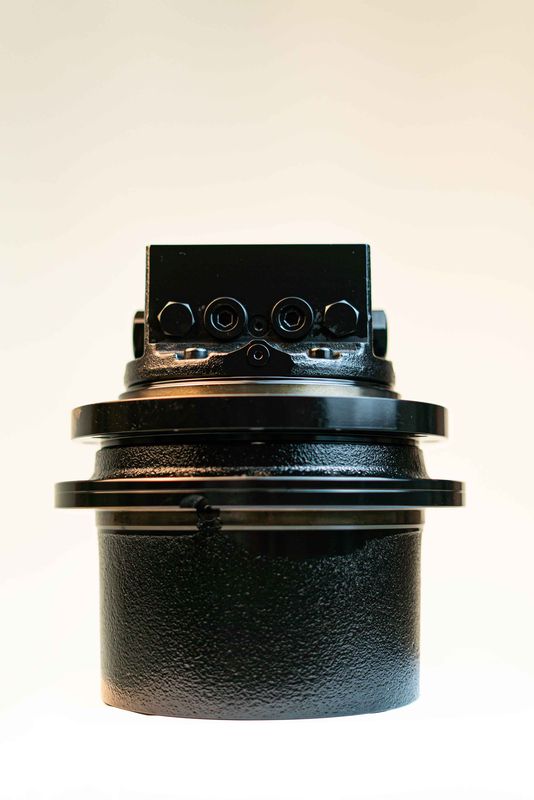
For example, an excavator manufacturer may specify particular hydraulic pumps, travel motors, final drives, control valves and other components for its machines.
Buyers looking for OEM parts may want to maintain the original specification or source a component through an established manufacturer supply channel.
Advantages of OEM parts
Original specification reference
OEM parts can provide a reference point when matching a replacement to the machine's original design. The correct part number and application still need to be verified.
Established application information
Manufacturer parts catalogues and technical documentation can help identify the appropriate component for a particular model and serial number range.
Potentially straightforward identification
If the original part number is known, it may be possible to use it to identify the required replacement or an officially superseded part.
Useful for specification sensitive applications
Where a machine requires a particular configuration, sourcing the correct specified component can help maintain the intended design and operating characteristics.
Disadvantages of OEM parts
OEM parts may not always be the most convenient or economical option.
Potential disadvantages include:
-
Higher purchase prices for some components.
-
Longer lead times when a part is not readily available.
-
Limited purchasing options in certain markets.
-
Additional shipping costs depending on the supplier and destination.
These factors vary by manufacturer, part and application. OEM parts are not automatically more expensive in every case, and availability should always be checked for the specific component.
2. What Are Aftermarket Excavator Parts?
Aftermarket excavator parts are replacement components produced by manufacturers other than the original equipment manufacturer.
They are designed to serve as alternatives to original components, although the design, construction, quality and degree of compatibility can vary between products and suppliers.
Aftermarket options are available across many equipment categories, including final drives, hydraulic pumps, travel motors, swing gearboxes, seals, filters and other service components.
Advantages of aftermarket parts
More purchasing options
Aftermarket suppliers can give buyers additional choices when sourcing a replacement component.
Potential cost savings
Some aftermarket parts are available at a lower purchase price than comparable OEM alternatives. The actual saving depends on the product and the supplier.
Alternative stock availability
An aftermarket supplier may have a suitable replacement available when an original component has a long lead time. This is not guaranteed, so stock and dispatch times should be confirmed.
Choice of supplier and warranty
Buyers can compare different suppliers' product specifications, warranty conditions, support services and delivery options.
Disadvantages of aftermarket parts
Aftermarket components should be evaluated carefully rather than selected on price alone.
Potential concerns include:
-
Differences in manufacturing standards and quality.
-
Incomplete or unclear compatibility information.
-
Variation in warranty coverage.
-
Difficulty identifying the manufacturer or product specification.
-
Uncertainty about the availability of replacement components or technical documentation.
These concerns do not apply to every aftermarket part. A reputable supplier with clear product information and appropriate quality controls can help buyers assess their options.
3. OEM vs Aftermarket Excavator Parts: Key Differences
The main distinction is the source of the component, but there are several other factors worth comparing before making a purchase.
| Factor | OEM parts | Aftermarket parts |
|---|---|---|
| Source | Original equipment manufacturer or relevant supply arrangement | Independent manufacturer |
| Price | Varies by component and supplier | May offer a lower cost alternative |
| Compatibility | Must still be checked against the machine | Must be verified against the machine |
| Availability | Depends on stock and manufacturer supply | Depends on the aftermarket supplier |
| Quality | Depends on the specified product and supply channel | Varies by manufacturer and product |
| Warranty | Subject to the applicable manufacturer or seller terms | Subject to the supplier's terms |
| Choice | Depends on the original supply network | May offer several alternative products |
| Technical information | May be available through manufacturer documentation | Depends on the supplier and manufacturer |
Neither category guarantees a particular price, delivery time or service life.
The best approach is to compare specific products that are confirmed to be suitable for your machine.
4. Which Is Better for Excavator Final Drives?
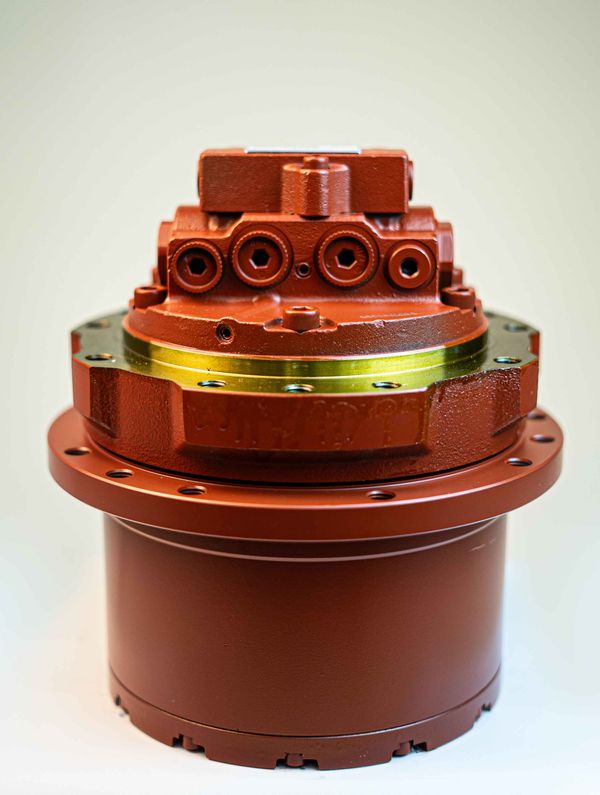
Final drives are among the most important components in a tracked excavator's undercarriage. They transfer power to the drive sprocket, allowing the machine to travel and manoeuvre.
When a final drive fails, buyers may need to balance replacement cost against the consequences of continued downtime.
When an OEM final drive may be suitable
An OEM option may be worth considering when:
-
You want to source the original specified component.
-
The manufacturer can confirm the correct application.
-
The required part is available within your repair timeframe.
-
The price and warranty terms suit your budget and requirements.
When an aftermarket final drive may be suitable
An aftermarket replacement may be worth considering when:
-
A suitable unit is available for your exact machine.
-
You want to compare alternatives to the original component.
-
The supplier can confirm the relevant specifications.
-
The warranty and product information meet your requirements.
-
The overall purchase and delivery cost offers good value.
What should you check before ordering?
Final drives can differ in mounting arrangement, gear ratio, hydraulic motor specification, brake configuration and other details.
Before purchasing, verify:
-
The excavator's manufacturer and full model designation.
-
The machine serial number.
-
The part number on the existing assembly.
-
Whether the replacement includes the hydraulic travel motor and reduction gearbox.
-
Any relevant mounting, output and hydraulic specifications.
-
The warranty, delivery and return conditions.
Do not assume that a final drive will fit simply because it is advertised for a similar excavator model.
5. OEM vs Aftermarket Hydraulic Pumps
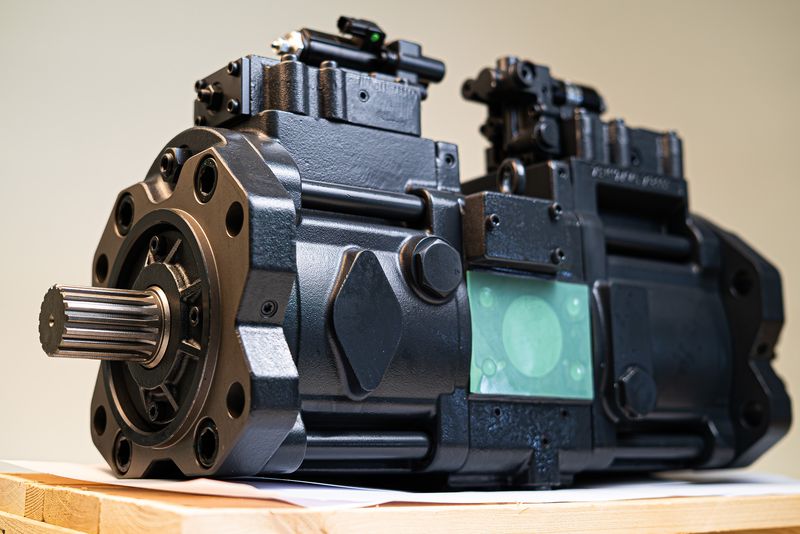
Hydraulic pumps supply the flow and pressure required to operate excavator functions, including the boom, arm, bucket, travel and swing systems.
Because the hydraulic system depends on the correct pump specification, compatibility is particularly important when choosing a replacement.
Why hydraulic pump specifications matter
Hydraulic pumps can differ in displacement, control arrangement, pressure rating, mounting configuration and other technical characteristics.
A pump that physically fits may not necessarily provide the correct performance or control characteristics for the machine.
Choosing an OEM hydraulic pump
An OEM pump may be appropriate when the original specification is required and the correct unit is available.
Check the machine's parts documentation and confirm that the quoted part matches the relevant model and serial number range.
Choosing an aftermarket hydraulic pump
An aftermarket pump may provide a suitable alternative if its specification is confirmed for the application.
Before buying, ask the supplier to confirm the part number, control configuration, mounting details and any other requirements relevant to the machine.
For either option, the cause of the original failure should also be investigated. Contamination, incorrect servicing or another hydraulic fault may damage a replacement pump if the underlying problem is not addressed.
6. What About Travel Motors and Swing Gearboxes?
Travel motors and swing gearboxes are other components where the choice between OEM and aftermarket parts deserves careful consideration.
Travel motors
A travel motor converts hydraulic power into rotation to drive the final drive gearbox.
When replacing one, check whether you need the hydraulic motor alone or a complete final drive assembly. Also verify the motor's specification, mounting arrangement, hydraulic ports and any relevant brake or valve configuration.
Swing gearboxes
A swing gearbox transfers power through a reduction mechanism to rotate the excavator's upper structure.
Replacement units can differ in mounting details, gear ratios, output arrangements and motor configuration.
Check whether the product includes the swing motor or supplies the gearbox only. This is particularly important when comparing prices between different listings.
The same principle applies to other parts
Whether you're purchasing an oil cooler, control valve, gear pump or another replacement component, compare the exact specification and included items.
The product category alone is not enough to establish compatibility.
7. How to Judge the Quality of an Aftermarket Excavator Part
If you're considering an aftermarket component, ask the supplier questions that help you assess the specific product.
Check the manufacturer's information
Look for clear identification of the component, its intended application and any relevant technical specifications.
Where possible, establish who manufactures the part and whether supporting documentation is available.
Confirm the application
A supplier should be able to explain how the part has been matched to your machine.
Provide the model, serial number and original part number rather than relying on a general description alone.
Ask about testing
For components where testing is relevant, ask what checks are performed before dispatch.
For example, a hydraulic component may require testing appropriate to its design and function. A claim that a product has been tested should relate to the actual unit and applicable procedures.
Review the warranty terms
Find out what the warranty covers, how long it lasts and whether there are conditions relating to installation, maintenance or failure investigation.
Also ask how warranty claims are handled and whether any labour or shipping costs are excluded.
Consider technical support
Good technical support can help resolve fitment questions before purchase and assist with product enquiries afterwards.
This is particularly valuable when dealing with complicated hydraulic or drivetrain components.
Compare the complete offer
A component's value depends on more than its advertised price. Consider the specification, warranty, stock availability, shipping and the supplier's ability to help you identify the correct part.
8. How to Find the Correct Replacement Excavator Part
One of the most common purchasing mistakes is ordering a component based only on the excavator's model name.
Manufacturers can introduce changes during a machine's production life, meaning different versions may use different components.
Use the following process to reduce the risk of ordering incorrectly.
Step 1: Identify the machine
Record the manufacturer and full model designation, including any suffixes or production identifiers.
Step 2: Record the serial number
The serial number can help establish which parts specification applies to your machine.
Provide it to your supplier whenever possible.
Step 3: Find the original part number
Check the identification plate, stamped markings or available parts documentation.
Record the entire number, including letters and suffixes. If the number has been superseded, ask the supplier to confirm the replacement reference.
Step 4: Photograph the existing component
A clear photograph of the identification plate and, where useful, the mounting arrangement can help with identification.
Do not remove guards or access components in an unsafe manner simply to obtain a photograph.
Step 5: Confirm the replacement specification
Ask the supplier to verify the part against your machine information and clarify exactly what is included.
Step 6: Confirm the commercial terms
Before placing the order, check the price, warranty, stock status, estimated dispatch, shipping options and return policy.
Taking these steps can help prevent avoidable delays and additional costs.
9. How to Compare the Total Cost of Replacement Parts
A lower purchase price can be attractive, but the overall cost of a replacement should include more than the component itself.
Consider these factors when comparing OEM and aftermarket options.
Purchase price: The quoted price of the part itself.
Shipping: Delivery charges, packaging and any additional transport requirements.
Installation: Labour and equipment required to remove the failed component and fit the replacement.
Additional materials: Fluids, seals, filters or other service items that may be required.
Downtime: The potential business impact while the machine is unavailable.
Warranty: The scope of coverage and the process for resolving a product issue.
Technical support: Assistance with identification, fitment and installation questions.
A component that costs less initially may not represent better value if it is incorrectly specified or causes additional delays. Equally, a more expensive component is not automatically the better choice.
The goal is to find a suitable, dependable replacement at a competitive total cost.
10. Common Mistakes to Avoid When Buying Excavator Parts
Avoiding a few common mistakes can make the purchasing process much smoother.
Choosing by price alone
Price matters, but it should be compared alongside specification, warranty, delivery and supplier support.
Ignoring the serial number
Similar machine models can use different parts. Providing the serial number helps establish the correct application.
Assuming all aftermarket parts are the same
Aftermarket components vary by manufacturer, design and quality. Assess the actual product rather than making assumptions about the entire category.
Confusing the motor with the complete final drive
A travel motor and a complete final drive assembly are not necessarily the same product. Confirm which components are included.
Failing to investigate the original fault
A replacement may fail prematurely if the underlying cause, such as contamination or a hydraulic system problem, remains unresolved.
Overlooking warranty and return terms
Understand the supplier's conditions before ordering, particularly for expensive or specialised components.
Leaving the purchase until the last minute
Where possible, identify the correct replacement early and confirm availability and delivery expectations. This can help you plan repairs and reduce avoidable downtime.
11. Why Choose Pro Construction Parts?
Finding the right replacement excavator part involves more than comparing product prices. Buyers need clear product information, appropriate warranty options and support when checking compatibility.
At Pro Construction Parts, we supply replacement components for construction and earthmoving equipment across a range of applications.
Our range includes parts such as final drives, travel motors, hydraulic pumps, swing gearboxes and other equipment components.
We offer warranty options, free economy shipping and technical support to help customers make informed purchasing decisions. Our UK and US warehouse operations support dispatch to customers in different markets, with additional shipping options available.
When requesting a replacement, provide your machine's make, model, serial number and existing part number. This information helps our team check the application and identify a suitable option.
Whether you're comparing an OEM part with an aftermarket alternative or looking for a replacement for a failed component, checking the specification before ordering is an important step towards avoiding unnecessary delays.
Frequently Asked Questions
Are OEM excavator parts always better than aftermarket parts?
Not necessarily. OEM and aftermarket products should be evaluated individually. Compatibility, product quality, warranty, availability and total cost all matter when selecting a replacement.
Are aftermarket excavator parts reliable?
Reliability varies by manufacturer, product and application. Check the technical specifications, quality information, warranty terms and supplier support before purchasing.
Are aftermarket excavator parts cheaper?
Some aftermarket components cost less than comparable OEM alternatives, but prices vary. Compare specific products and include shipping, installation and other relevant expenses.
Will an aftermarket final drive fit my excavator?
Only if it is correctly matched to your machine. Confirm the model, serial number, existing part number and relevant technical specifications before ordering.
Can I use an aftermarket hydraulic pump in my excavator?
An aftermarket pump may be suitable when its specification is confirmed for the machine. Hydraulic displacement, control configuration, pressure requirements and mounting details may all be relevant.
Does buying OEM guarantee a longer service life?
No. Service life depends on the component, operating conditions, installation, maintenance and other factors. An OEM designation alone does not guarantee a particular lifespan.
What information do I need to order a replacement part?
Provide the machine make, full model designation, serial number and existing part number where possible. Photographs of the component identification plate can also help.
Should I repair or replace a failed excavator component?
The decision depends on the type and extent of damage, repair costs, parts availability and the condition of the remaining assembly. A qualified technician can help assess the available options.
Conclusion: Choose the Right Excavator Parts for Your Machine
Choosing between OEM and aftermarket excavator parts does not have to be complicated. The key is to compare suitable products using accurate machine information and a clear understanding of the total cost.
OEM parts may be appropriate when you want to source the original specified component. Aftermarket alternatives can provide additional options for price, availability and supply. Neither category should be selected without checking the actual product and its suitability for the machine.
Before ordering a final drive, hydraulic pump, travel motor or swing gearbox, confirm the part number, serial number range, product specification, warranty and delivery arrangements.
Looking for replacement excavator parts?
Contact Pro Construction Parts with your machine details and existing part number. Our team can help you check the application, explore suitable replacement options and make a more informed purchasing decision.
With warranty options, free economy shipping and technical support, Pro Construction Parts is here to help you source replacement components for your construction and earthmoving equipment.


